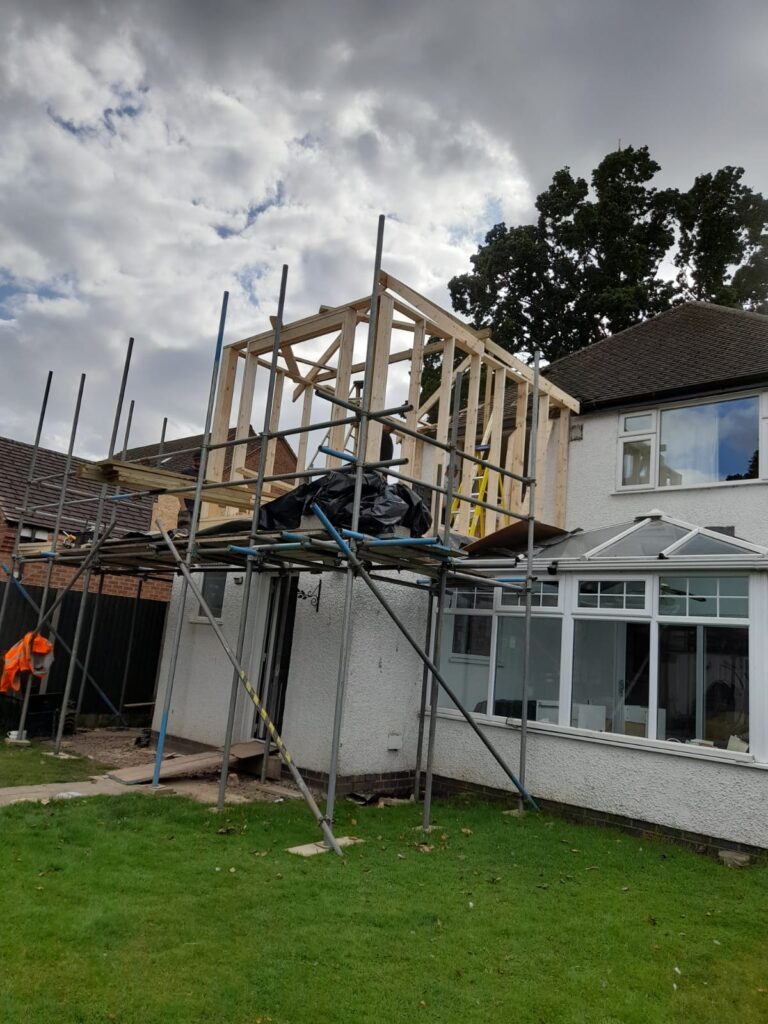
Do I need planning permission for an extension?
For many UK homeowners, planning rules feel confusing — and for good reason. Whether you need planning permission for an extension depends on the type of property you own, where you live, and how large the extension will be.
Here’s the short answer:
You may not need planning permission for a single-storey rear extension, because many fall under Permitted Development (PD).
However, permission is required if your extension exceeds size limits, is in a restricted area, significantly changes the appearance of the property, or affects neighbours.
Within the first 30% of this article, here is the internal reference:
Explore our Domestic Builds service for expert help with planning, design, and construction.
Quick summary of key rules (Permitted Development criteria):
A single-storey rear extension can typically be built without planning permission if it meets the following:
- Maximum depth of 3m for semi-detached/terraced houses
- Maximum depth of 4m for detached houses
- Larger Home Extension Scheme allows 6m / 8m with neighbour consultation
- Maximum height: 4m
- Eaves height: 3m if within 2m of a boundary
- Materials must be of “similar appearance”
- No verandas, balconies, or raised platforms
- Total extensions must not cover more than 50% of the original garden
- No planning allowed under PD in: flats, maisonettes, listed buildings, or Article 4 areas
This guide breaks down every extension type, realistic 2025 costs, and what to do if you’ve already built without approval.
The easier way to book quality trades
If you’re planning an extension, our Domestic Builds team can handle the full process — from design and drawings to construction and finish. We focus on clear communication, transparent costs, and high-quality workmanship so your project runs smoothly from start to finish.
Planning permission for an extension
Before looking at specific extension types, it helps to understand the difference between Planning Permission and Permitted Development (PD).
Planning Permission vs Permitted Development
- Planning Permission: Formal approval from your local council for building work that affects appearance, size, or land use.
- Permitted Development: A set of pre-approved rights allowing certain extensions without a full planning application, provided you meet strict size and position rules.
What PD allows (simple checklist):
You can usually build without planning permission if:
- Your extension is within PD size limits
- Materials are visually similar
- It is to the rear of the property
- It does not exceed the height limits
- It does not take up more than 50% of your garden
When PD does not apply
You will need planning permission if:
- Your home is in a Conservation Area
- You live in a Listed Building
- The property is under an Article 4 Direction
- You live in a flat or maisonette
- The extension changes the use of the building
- The extension is forward-facing towards a highway
Planning permission ≠ Building Regulations
Even if you do not need planning permission, your project still needs Building Regulations approval for:
- Structure
- Drainage
- Insulation
- Fire safety
- Ventilation
Real-world example
A homeowner in Bath wanted a small 2.5m rear extension. Normally this would fall under Permitted Development, but because the property was in a Conservation Area, PD rights had been restricted. They required full planning permission.
Planning permission for a single-storey extension
This is the most important section of the article, as most homeowners ask about single-storey rear extensions.
Permitted Development limits (2025 rules)
1. Maximum depth
- 3 metres for terraced or semi-detached houses
- 4 metres for detached houses
2. Larger Home Extension Scheme (Neighbour Consultation)
You may extend up to:
- 6 metres (semi-detached / terraced)
- 8 metres (detached)
But this requires:
- A neighbour notification process
- A 42-day consultation
- Council approval (even though it’s not “full planning permission”)
3. Height limits
- Overall height: max 4 metres
- If within 2m of a boundary, eaves must be no higher than 3m
4. Roof rules
- No balconies or raised platforms
- Pitched roof must match existing roof style
- Flat roofs must stay within height limits
- Roof lanterns allowed if:
- No higher than 3m above the roof
- Not exceeding PD protrusion limits
- No higher than 3m above the roof
5. Materials
They must be of “similar appearance” to the existing property.
For example:
- A modern black zinc extension on a 1930s brick home → likely needs planning permission.
6. Side extension rules
Side extensions under PD must:
- Be single-storey
- Be no more than half the width of the original house
- Not be a wrap-around extension (these ALWAYS require planning permission)
7. Garden coverage
Extensions may not cover more than 50% of the original garden.
When planning permission is required for a single-storey rear extension
You will need a full planning application if:
- You exceed PD depth or height
- Your materials contrast significantly
- You live in an Article 4 or conservation area
- You want a wrap-around extension
- Your extension is closer to the boundary than allowed
- You want a roof higher than 4 metres
Case study
A Birmingham homeowner built a 4.3m rear extension on a detached house — only 30cm over the limit. The council required a full planning application, and because the structure was already built, they had to apply retrospectively.
2025 cost ranges for single-storey extension planning
- Householder planning application fee: £258
- Architect drawings: £900–£2,000
- Structural engineer: £350–£1,200
- Builder costs for the extension: £1,800–£2,800 per m²
- Party wall agreements (if needed): £900–£2,000 per neighbour
Planning permission for a kitchen extension
Most kitchen extensions are simply single-storey rear extensions, so they often fall under PD.
A kitchen extension needs planning permission if:
- You exceed the 3m/4m depth limits
- You’re adding a side return AND rear wrap-around
- You’re altering a chimney, vent, or flue
- You live in a flat, maisonette, or protected area
- You are building close to a boundary with a high eaves level
Key Building Regulation considerations:
- Fire escape/egress windows
- Mechanical ventilation (required in kitchens)
- Electrical safety (Part P)
- Thermal insulation standards
- Drainage for new sinks/utilities
Practical issues
Kitchen extensions typically require:
- RSJ installation
- Structural calculations
- Upgraded drains
- New foundations
Planning permission for a garage extension
Garage projects fall into two categories:
1. Garage conversions
- Converting an internal/attached garage into a habitable room
- Usually does NOT require planning permission, unless the external appearance changes significantly.
2. Garage extensions
When adding extra space to a garage:
- PD applies, but depth/height rules still apply
- Changing the roof shape often requires planning
- Extending a garage toward the road almost always requires planning
- Detached garages have separate size limits
Example
Converting an attached garage into a utility or living space typically falls under PD.
But extending the front of a garage by even 1–2 metres usually does require planning permission, because it changes the street-facing façade.
Typical 2025 costs
- Conversion: £10,000–£25,000
- Garage extension: £20,000–£45,000+
Planning permission for a two-storey extension
Two-storey extensions are heavily restricted under PD.
PD rules allow a two-storey extension only if:
- It is to the rear (not side)
- It is no more than 3m deep
- Roof pitch matches existing
- No balconies
- Upper-floor windows use obscured glass
- No closer than 7m to the rear boundary
Because this criteria is difficult to meet, most two-storey extensions require full planning permission.
Typical 2025 costs
- Build cost: £70,000–£140,000+
- Architect drawings: £1,500–£4,000
- Planning fees, surveys, structural calculations
Common reasons for refusal
- Overlooking neighbours
- Overshadowing
- Out-of-character design
- Excessive bulk/massing
Cost of planning permission for an extension
Here are the realistic 2025 UK costs:
Planning Application Fees
- Householder application (England): £258
- Planning amendment: £43
Professional fees
- Architect drawings: £900–£2,500
- Structural engineer: £350–£1,200
- Planning consultant (optional): £800–£2,000
- Specialist surveys (if required):
- Flood risk: £500–£1,200
- Ecology/Bat survey: £300–£1,500
- Tree survey: £300–£900
- Flood risk: £500–£1,200
Party Wall Agreements
- £900–£2,000 per neighbour
Total realistic pre-build cost
£1,500–£4,000 before any building work begins.
What to do if you have no planning permission for your extension?
If you’ve built an extension without planning permission, don’t panic.
Immediate steps
- Stop work (if ongoing).
- Check whether the extension meets PD rules.
- Consult an architect or planning consultant.
- Apply for a Lawful Development Certificate (LDC) if it is compliant.
- Apply for retrospective planning permission if it is not.
If planning is refused
- You may appeal
- Or you may need to make alterations
- In rare cases, a council can issue an enforcement notice
FAQs
How can I apply for planning permission for an extension?
- Prepare drawings
- Submit application online via the Planning Portal
- Pay the fee
- Wait for the 8-week review
- Respond to any requests for amendments
How much is planning permission for an extension?
The fee for a householder application in 2025 is £258.
When do you need planning permission for an extension?
You need planning permission when:
- Your extension exceeds PD size limits
- You live in a restricted area
- You want a wrap-around extension
- You change the front/side facing the road
- You affect neighbours’ privacy or daylight
Do you need planning permission for a small extension?
Most small extensions fall under PD if:
- They are under 3m/4m deep
- They meet height and boundary rules
- Materials match the existing house